10 Days Along Spain’s Costa Blanca
Most people fly straight from Barcelona to Madrid and miss everything in between. A proper Barcelona to Madrid road trip itinerary takes you down the Mediterranean coast through Valencia, Alicante and Murcia first, then cuts inland to the capital — a route that follows the AP-7 and A-30 motorways almost the entire way, so you’re never stuck backtracking. This 10-day plan is built for travellers who want beach time, a few good cities, and a manageable amount of driving.
How to Get to Barcelona
Barcelona–El Prat Airport (BCN) is the natural starting point, with direct flights from London, Berlin, Paris, Lisbon and Rome. A return flight from most major European cities runs €40–€120, with the cheapest fares appearing in the shoulder seasons (April–May and late September–October). Since this itinerary ends in Madrid, book an open-jaw ticket — fly into Barcelona and out of Madrid–Barajas (MAD) — rather than a round trip, which usually costs about the same or less than backtracking.
If you’re coming from elsewhere in Spain or Europe by land, Barcelona is also well connected by Flixbus (from €15–€35 depending on origin) and by the Renfe/AVE high-speed rail network.
Day 1–2 — Barcelona: Gaudí, tapas and the Gothic Quarter
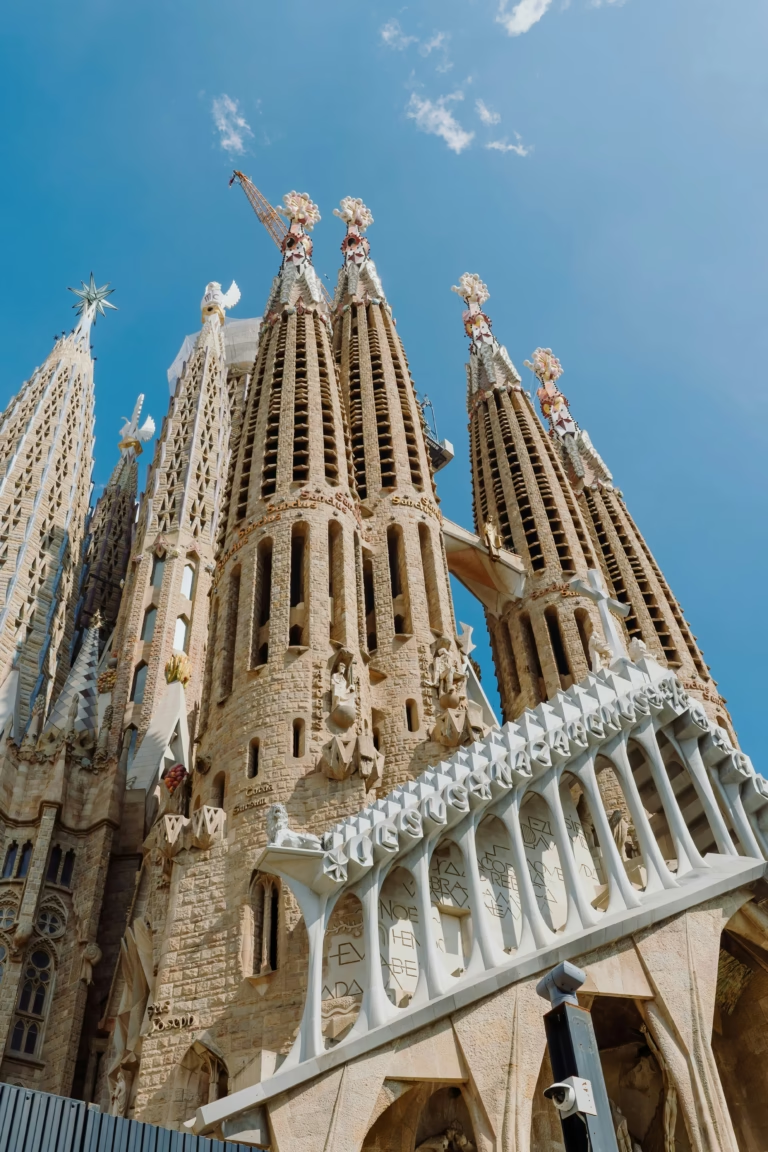
Spend your first morning wandering the Gothic Quarter, then head to Sagrada Família — book tickets online in advance, as walk-up queues can eat up half a morning. In the afternoon, walk Passeig de Gràcia to see Casa Batlló and La Pedrera from outside (entry isn’t necessary to appreciate them).
On day two, take the funicular up to Montjuïc for views over the port, then spend the evening in El Born, where the tapas bars are denser and slightly less touristy than La Rambla.
What to eat in Barcelona
- Pa amb tomàquet — grilled bread rubbed with tomato and olive oil, the base of most tapas orders
- Bombas — fried potato croquettes with a spicy aioli, a Barceloneta speciality
- Vermut — the local aperitif, best enjoyed at a bodega before lunch on a Sunday
Average daily budget in Barcelona:
- Accommodation: €55–€80 (Airbnb)
- Meals: €20–€35 per person
- Transport (metro/bus): €10–€15
Day 3–4 — Valencia: futuristic architecture meets old-town streets
Pick up your rental car in Barcelona and drive south on the AP-7 (~350 km, 3h30). Once in Valencia, spend the afternoon at the City of Arts and Sciences, Santiago Calatrava’s cluster of white, curved buildings that houses an aquarium and a science museum.
On day four, flip the mood entirely: walk the medieval streets of El Carmen, then cycle or walk the Turia Gardens, a former riverbed turned nine-kilometre park that cuts through the city. End the day at Malvarrosa beach for sunset.
What to eat in Valencia
- Paella valenciana — the original version, made with rabbit and chicken, not seafood
- Horchata with fartons — a sweet tiger-nut drink paired with sugared pastry, sold at century-old horchaterías
- Esgarraet — shredded salt cod with roasted red peppers, a typical starter
Average daily budget in Valencia:
- Accommodation: €50–€75 (Airbnb)
- Meals: €18–€30 per person
- Car rental (Barcelona pick-up, Madrid drop-off, 10 days): €579.99 total — see full breakdown below
Day 5 — Alicante: castle views and Costa Blanca beaches
Drive south (~170 km, 1h45) and spend the day in Alicante. Climb to the Castillo de Santa Bárbara — either on foot through Parque de la Ereta or via the lift from Postiguet beach — for the best panorama on the Costa Blanca. Afterwards, walk the Explanada de España, its wave-patterned marble promenade lined with palm trees, and cool off at Postiguet beach, right in the city centre.
What to eat in Alicante
- Arroz a banda — rice cooked in fish stock, served separately from the seafood
- Turrón — nougat from nearby Jijona, sold in specialist shops around the old town
- Nyora pepper stews — the small dried red pepper used throughout Costa Blanca cooking
Average daily budget in Alicante:
- Accommodation: €45–€70 (Airbnb)
- Meals: €18–€28 per person
- Transport to/from Valencia: included in car rental
Day 6–7 — Murcia: an underrated stop with a striking cathedral
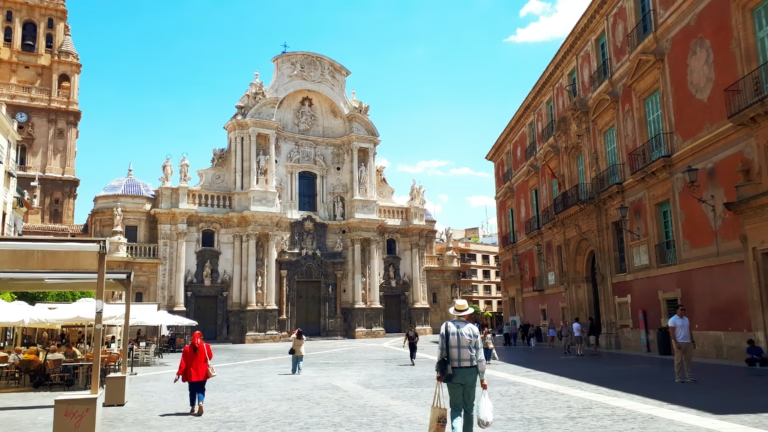
The drive from Alicante to Murcia is short (~80 km, 1h), leaving most of day six for exploring. The Catedral de Murcia dominates the old town with its Baroque façade — worth the entrance fee to climb the tower for rooftop views over the city.
On day seven, slow down: wander the streets around Plaza Cardenal Belluga, browse the Mercado de Verónicas for local produce, and try a few tapas bars in the Santa Catalina area, which locals rate above the more central options.
What to eat in Murcia
- Zarangollo — scrambled eggs with courgette and onion, a simple Murcian home-cooking staple
- Marinera — a small roll topped with Russian salad and an anchovy, a Murcia bar snack invented in the 1960s
- Pastel de carne murciano — flaky puff pastry pie filled with minced meat and hard-boiled egg
Average daily budget in Murcia:
- Accommodation: €40–€65 (Airbnb)
- Meals: €15–€25 per person
- Transport to/from Alicante: included in car rental
Day 8–10 — Madrid: the grand finale
The last leg is the longest single drive of the trip (~400 km, 4h), so leave Murcia in the morning. Once in Madrid, ease in with a walk through Retiro Park and a first look at Plaza Mayor.
Day nine is for the Museo del Prado — go early to avoid the tour groups — followed by an evening in La Latina, Madrid’s best neighbourhood for a tapas crawl. On your final day, visit the Royal Palace, browse the El Rastro flea market if it falls on a Sunday, and return your rental car before your flight out of Barajas.
What to eat in Madrid
- Cocido madrileño — a slow-cooked chickpea stew served in courses, a winter classic but available year-round in traditional restaurants
- Bocadillo de calamares — fried squid rings in a bread roll, a Plaza Mayor institution
- Vermut de grifo — draught vermouth, the Madrid answer to Barcelona’s bottled version
Average daily budget in Madrid:
- Accommodation: €55–€85 (Airbnb)
- Meals: €20–€35 per person
- Transport to/from Murcia: included in car rental
Estimated Total Budget for 10 Days
- Accommodation (9 nights): €450–€700
- Meals (10 days, per person): €190–€300
- Car rental (Barcelona to Madrid, one-way, 10 days): €579.99 total (~€58/day, includes one-way drop-off fee)
- Entrance fees & activities: €90–€140 (Optional)
- Total per person: ~€1,220–€1,580 + flights (car rental cost is per vehicle — split it if travelling as a group)
Budget tip: the €579.99 rental already factors in the one-way drop-off fee, which can otherwise add €100–€150 on top of the base rate — book it as a single Barcelona-to-Madrid package rather than a standard round-trip rental to avoid that surprise. Travelling in the shoulder season (April–May or late September–October) also means shorter queues at the Sagrada Família and the Prado.
Practical Travel Tips for This Route
- Best time to visit: late April to early June or September to mid-October, when temperatures along the coast are warm but not punishing and accommodation prices drop from peak summer rates.
- Getting around: a rental car is the right call for this route — the coastal towns between Valencia and Murcia aren’t well connected by train, and having your own car means you can stop at smaller beaches along the way.
- Language: Spanish is spoken everywhere, though Valencian (a Catalan dialect) appears on signage in Valencia. English is common in tourist areas but less so in smaller towns like Murcia.
- Money-saving tip: eat your main meal at lunchtime, when most restaurants offer a menú del día — a fixed-price two- or three-course meal that typically costs €10–€15, roughly half of what the same dishes cost à la carte at dinner.
- Logistics note: parking in the centre of Barcelona and Madrid is expensive and often restricted; book accommodation with private parking, or park on the outskirts and use public transport for city centre days.
- Travel with company: doing this trip with two or more people brings the cost down significantly — the €579.99 car rental and most Airbnb bookings are priced per vehicle/unit rather than per person, so splitting them between two, three or four travellers can cut the per-person total by 30–50%.
For images and videos, click the buttons below.
For more similar trips, click on one of the images.