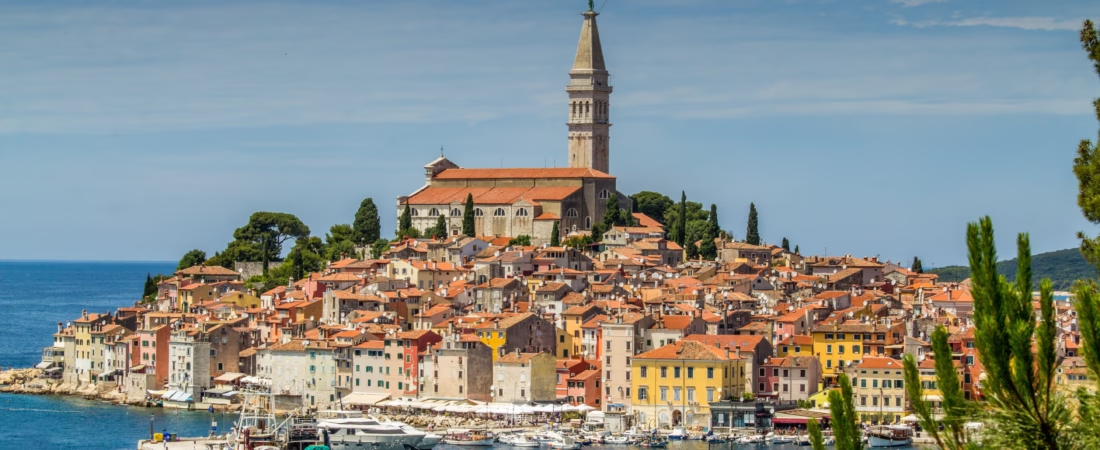
Croatia’s most underrated region is hiding in plain sight. While most travelers rush south to Dubrovnik and Split, the Istria itinerary that takes you through this triangle-shaped peninsula in northern Croatia is one of the most rewarding travel experiences in all of Europe. Roman amphitheaters, Venetian-style coastal towns, truffle forests, rolling vineyards, and some of the clearest water on the Adriatic — all within easy reach of each other.
The best part? Istria feels nothing like the rest of Croatia. Its centuries of Venetian and Austro-Hungarian influence give it an almost Italian feel, with bilingual signs, pasta-heavy menus, and a relaxed, unhurried rhythm that the crowds down south have long forgotten.
This 4-day itinerary covers the very best of Istria — from Pula’s ancient ruins to Rovinj’s romantic harbors and the medieval hilltop towns of the interior. A rental car is highly recommended: it unlocks the region’s hidden gems and keeps your costs manageable.
How to Get to Istria
The main gateway to Istria is Pula Airport (PUY), with direct flights from London, Brussels, Rome, and several Central European cities, especially in summer. Alternatively, fly into Rijeka (RJK) or Trieste (TRS) in Italy — both are roughly an hour’s drive from northern Istria.
Average return flights from major European cities: €40–€120 with low-cost carriers.
Shoulder season (May and September) offers significantly lower prices and far fewer crowds.
Car rental: Renting a car is the best way to explore Istria, especially the hilltop villages of the interior, which have little to no public transport. Book at least 2–4 months in advance for the best rates.
- May, September–October: €35–€50/day
- Peak summer (July–August): €60–90/day
- Fuel for 4 days: approximately €50–€70
- Učka tunnel toll (if entering from Rijeka): €11.30
Day 1 – Pula: Two Thousand Years of History
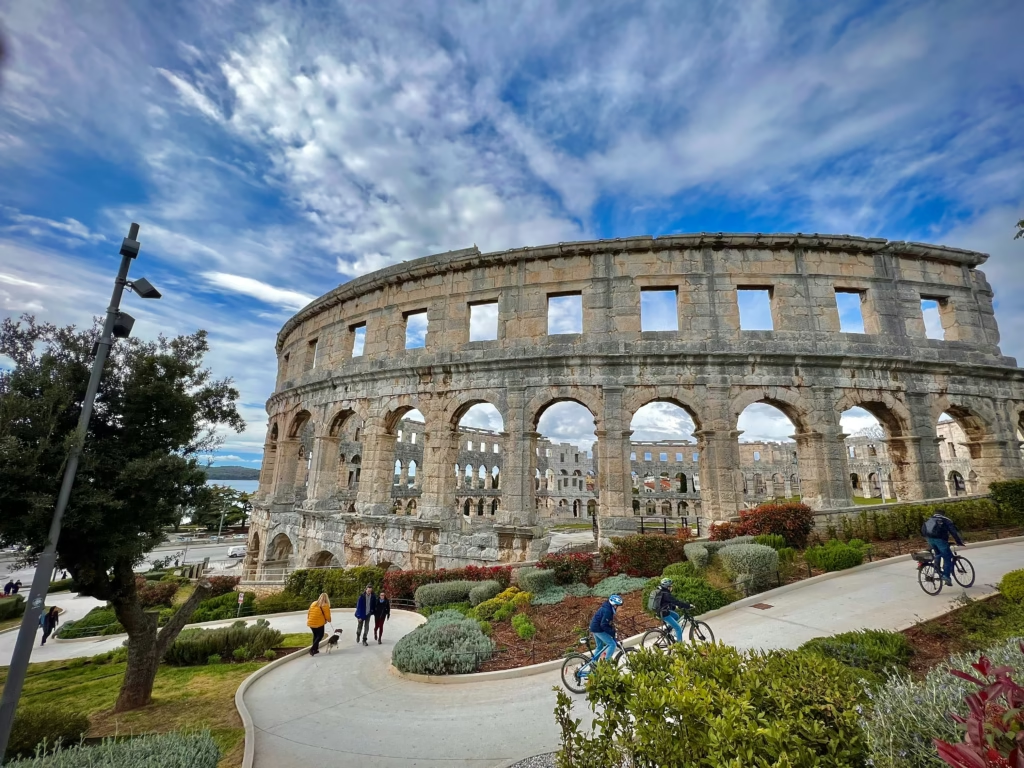
Start your Istrian adventure in Pula, a working port city with one of the best-preserved Roman amphitheaters in the world. The Pula Arena dates back to the 1st century AD and still hosts concerts and film festivals today — walk its elliptical corridors in the early morning before the tour groups arrive.
From the Arena, follow the Roman footsteps through the city center: the Arch of the Sergii, the Temple of Augustus overlooking Forum Square, and the old city walls. Pula doesn’t feel like a museum — it’s a lively, authentic city where locals actually live among the ruins.
In the afternoon, head to Cape Kamenjak, a protected nature reserve just south of Pula, where rocky coves and pine forests meet some of the clearest water in the Adriatic. No crowds, no sunbeds — just raw coastline.
What to eat in Pula:
- Fuži (Istrian hand-rolled pasta with truffle sauce)
- Fresh sea bream with olive oil and wild herbs
- Fritule (small sweet fritters, popular street snack)
- Malvazija Istarska — the iconic local white wine
Average daily budget in Pula:
Accommodation: €60–70 (Airbnb)
Meals: €20–€30 per person
Pula Arena entrance: ~€15
Car rental: €35–€50/day
Day 2 – Rovinj: The Most Romantic Town on the Adriatic
Drive an hour north along the coast to Rovinj, widely considered the most beautiful town in Istria — and arguably in all of Croatia. Its old town sits on a small peninsula, with pastel-colored houses rising steeply from the sea, their reflection shimmering in the harbor below.
Climb the cobblestone lanes up to St. Euphemia’s Church at the very top, where the views stretch across the Rovinj archipelago and out to the open Adriatic. Explore the art galleries and boutique shops that line the narrow alleys below — Rovinj has long attracted painters and has a genuine artists’ community.
Spend the afternoon hiring a small kayak or boat to explore the nearby Red Island (Crveni otok) or the uninhabited islands of the Rovinj archipelago. The water here is impossibly clear.
What to eat in Rovinj:
- Black cuttlefish risotto (risotto nero)
- Grilled scampi with garlic and olive oil
- Istrian prosciutto with Istrian sheep’s cheese
- Teran — the bold local red wine
Average daily budget in Rovinj:
Accommodation: €60–70 (Airbnb)
Meals: €20–€30 per person
Day 3 – The Hilltop Villages: Motovun, Grožnjan & the Truffle Trails
Leave the coast behind and drive into the green heart of Istria — the Mirna River Valley, where medieval hilltop villages rise dramatically above vineyards and oak forests. This is truffle country, and the aromas from roadside farm stalls tell you everything you need to know.
Start in Motovun, perhaps the most dramatic of the hilltop towns, its medieval walls perched on top of a steep hill with panoramic views in every direction. Walk the town walls, browse local shops selling truffle products, honey, and olive oil, and stop for a glass of local wine at one of the small konobas.
Continue to Grožnjan, an artists’ village where galleries fill the stone houses and cats outnumber tourists. Then wind through the countryside toward Livade, the self-proclaimed truffle capital of the world, where you can visit a truffle market or book a short truffle-hunting experience.
This is the day to splurge on lunch — a truffle pasta or truffle risotto at a local agritourism farm is one of the defining meals of any Istrian trip.
What to eat in the interior:
- Truffle pasta (tagliatelle or fuži with shaved black or white truffle)
- Roasted lamb with herbs
- Istrian sausages and cured meats
- Local honey and wild asparagus (seasonal)
Average daily budget in the interior:
Accommodation: €60–70 (Airbnb, consider a farm stay)
Meals: €25–€40 per person (budget for a truffle lunch)
Day 4 – Poreč & the Parenzana Trail: A Perfect Farewell
End your Istrian journey in Poreč, a charming coastal town best known for the Euphrasian Basilica, a 6th-century Byzantine mosaic masterpiece and a UNESCO World Heritage Site. It’s one of the best-preserved early Christian buildings in the world and genuinely breathtaking inside — golden mosaics glowing in the half-light of the apse.
Wander Poreč’s old town, swim from the rocky platforms along the seafront promenade, and treat yourself to a final seafood lunch before heading to the airport.
If you have time before your flight, the Parenzana cycling and walking trail — a converted old narrow-gauge railway — passes through some beautiful countryside near Poreč and makes for a lovely couple of hours at a relaxed pace.
What to eat in Poreč:
- Whole baked fish with Swiss chard and potatoes
- Grilled squid with polenta
- Kroštule (sweet fried pastry)
- A final glass of Malvazija with ice
Average daily budget in Poreč:
Accommodation: none needed (travel day)
Meals: €20–€30 per person
Euphrasian Basilica entrance: ~€5
Estimated Total Budget for 4 Days
| Category | Estimated Cost |
|---|---|
| Accommodation (3 nights Airbnb) | €180–€210 |
| Meals (4 days, per person) | €100–€140 |
| Car rental (4 days, shoulder season) | €140–€200 |
| Fuel | €50–€70 |
| Total (per person) | ~€470–€620 + flights |
Budget traveler tip: Travel in May or September, cook some meals at your Airbnb, and skip the peak-season car rental surcharges — you can comfortably do this trip for around €500 + flights.
Total Estimated Budget: Romania Travel Itinerary
For more similar trips, click on one of the images.