Island Hopping in Croatia: The Ultimate 5-Day Dalmatian Islands Itinerary
A good Croatia island hopping itinerary is less about ticking off cities and more about slowing down — swapping one island for the next, chasing a different shade of blue every morning. The Dalmatian coast is scattered with islands that each have their own personality: pebble beaches backed by pine forest, Venetian stone towns, vineyards running down to the sea. This 5-day route takes you through five of the best — Brač, Hvar, Korčula, Vis and Mljet — using the catamaran network that connects them all summer long.
Unlike a one-island trip, this itinerary moves daily. Pack light, book your catamarans a few days ahead in July and August, and expect each island to feel completely different from the last.
How to Get to the Dalmatian Islands
Almost every island-hopping trip starts and ends in Split, which has the best ferry connections in the region and its own international airport (SPU).
Direct flights to Split run from London, Frankfurt, Amsterdam, Vienna, and several Italian cities, especially between April and October.
Average return flight prices within Europe (summer): €50–€140 with low-cost carriers. Shoulder season (May, late September) is noticeably cheaper and the ferry network is far less crowded — though some smaller routes run less frequently outside peak season.
Getting between islands: Catamarans run from Split’s main ferry terminal to Brač, Hvar, Korčula and Vis multiple times daily in summer. Ticket prices for foot passengers typically range from €6 to €25 per crossing depending on distance and operator. Booking a day or two ahead is enough outside of August.
Day 1 – Brač: Zlatni Rat and the Stone Villages
Take an early catamaran from Split to Bol, on the island of Brač (around 50 minutes). Bol is home to Zlatni Rat, Croatia’s most famous beach — a long triangular spit of pebbles that shifts shape slightly every year depending on the currents.
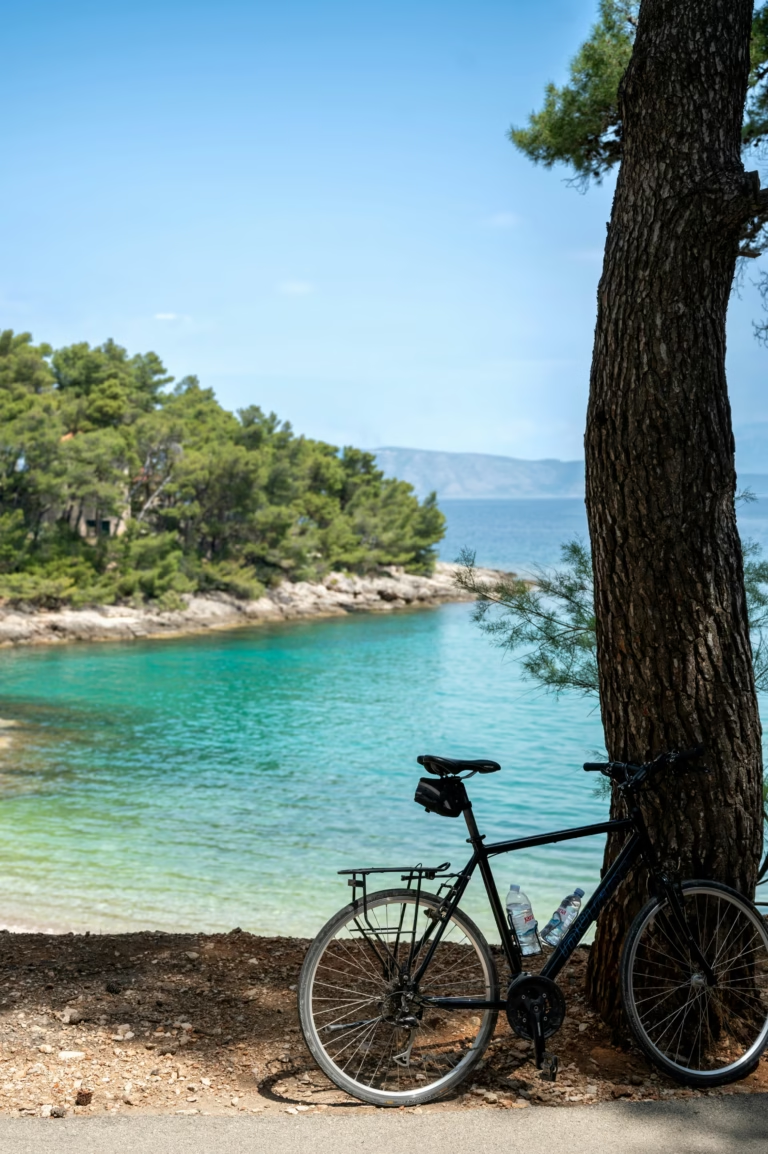
Spend the morning swimming and walking the pine-shaded promenade that runs along the coast. In the afternoon, rent a bike or scooter and head inland to Škrip, one of Brač’s oldest villages, where stone houses built into the hillside have barely changed in centuries. The island is also known for its quarries — the white Brač stone was used in the White House and Diocletian’s Palace in Split.
What to eat in Brač:
- Vitalac (grilled lamb offal wrapped in intestine, a Brač speciality)
- Fresh grilled fish with blitva (Swiss chard and potatoes)
- Brač cheese, made from sheep’s milk
- Local olive oil, often sold directly by producers
Average daily budget in Brač:
- Accommodation: €55–€70 (Airbnb)
- Meals: €18–€30 per person
- Catamaran Split to Bol: €10–€18
- Bike or scooter rental: €15–€25
Day 2 – Hvar: Lavender Fields and the Pakleni Islands
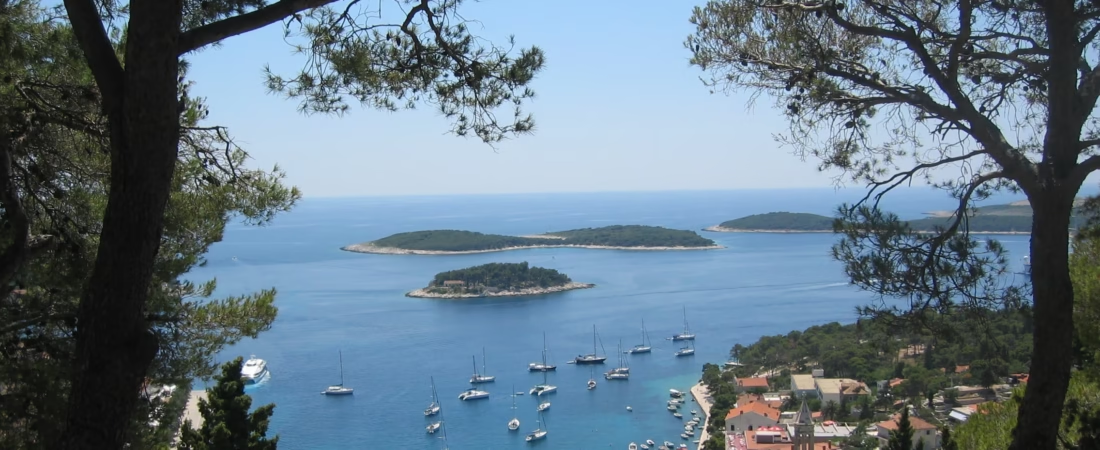
From Bol, catch a connecting catamaran to Hvar Town (often via Split, depending on the season — check current routes). Hvar is the glamorous one of the group, but its Old Town still has a working fishing harbour and a 13th-century fortress worth the climb for sunset views over the Pakleni archipelago.
In the afternoon, take a short water taxi out to the Pakleni Islands, a scattering of pine-covered islets just offshore with quiet coves and a handful of beach bars. It’s the easiest way to escape Hvar Town’s crowds without going far.
If you’re visiting in late June, try to time it with the lavender harvest in the island’s interior — the fields around Velo Grablje turn a deep purple and the air smells like it for days.
What to eat in Hvar:
- Gregada (Hvar’s traditional fish and potato stew)
- Octopus salad with capers and olive oil
- Hvar lavender honey
- Plavac Mali, the island’s signature red wine
Average daily budget in Hvar:
- Accommodation: €60–€75 (Airbnb)
- Meals: €20–€35 per person
- Catamaran Bol to Hvar: €10–€20
- Pakleni Islands water taxi (return): €10–€15
Day 3 – Korčula: Marco Polo’s Hometown
Take the morning catamaran from Hvar to Korčula Town (around 1–1.5 hours). Often nicknamed “Little Dubrovnik,” Korčula’s old town sits on a small fortified peninsula with the same honey-coloured stone and red rooftops — minus the cruise-ship crowds.
Wander the herringbone-pattern streets, designed centuries ago to block wind and sun in equal measure, and visit the house said to be the birthplace of Marco Polo. In the afternoon, head to Lumbarda, a small village a short drive or bus ride away, known for its sandy beaches — a rarity in a region dominated by pebbles — and its local Grk wine, grown in vineyards planted directly in sand.
What to eat in Korčula:
- Žrnovski makaruni (hand-rolled pasta with slow-cooked meat sauce)
- Fresh oysters and mussels from nearby Ston
- Grk wine, a dry white unique to Korčula
- Rožata, the regional custard dessert found across Dalmatia
Average daily budget in Korčula:
- Accommodation: €55–€70 (Airbnb)
- Meals: €20–€30 per person
- Catamaran Hvar to Korčula: €12–€22
- Local bus to Lumbarda: €2–€4
Day 4 – Vis: The Island That Stayed Closed
From Korčula, sail to Vis (connections often run via Hvar — check timetables, as this is the longest hop of the trip). Vis was a closed military zone until 1989, which means it missed the decades of coastal development that shaped the rest of Dalmatia. The result is the most untouched island on this itinerary.
Base yourself in Komiža, a fishing town on the west coast, and book a half-day boat trip to the Blue Cave (Modra Špilja) on the nearby islet of Biševo, where sunlight refracts through the water to turn the cave’s interior an intense electric blue. Combine it with a stop at Stiniva Beach, regularly ranked among Europe’s best — a tiny pebble cove squeezed between towering cliffs, accessible only by boat or a steep path.
What to eat in Vis:
- Viška pogača (a savoury flatbread with tomatoes, onions and anchovies)
- Grilled lobster (Vis is known for its lobster fishing)
- Komiža fish soup
- Vugava, a rare local white wine
Average daily budget in Vis:
- Accommodation: €55–€75 (Airbnb)
- Meals: €20–€35 per person
- Catamaran Korčula to Vis: €15–€25
- Blue Cave & Stiniva boat tour: €30–€45
Day 5 – Mljet: Forests, Lakes and the Last Ferry Home
On your final day, take a morning catamaran toward Mljet, most of which is protected as a national park. Unlike the other islands on this trip, Mljet’s landscape is dominated by dense pine forest and two saltwater lakes, Veliko and Malo Jezero, rather than open coastline.
Rent a bike at the park entrance and cycle around Veliko Jezero, stopping to swim in the warm, calm lake water — noticeably different from the open sea. In the centre of the lake sits a small islet with a 12th-century Benedictine monastery, reachable by a short boat shuttle included in the park ticket.
In the late afternoon, catch your final catamaran back to Split to connect with your onward flight, or stay one last night on the mainland before departing.
What to eat on Mljet:
- Grilled fish from the national park’s lakeside restaurants
- Mljet honey and homemade jams
- Goat cheese from local farms
- Simple Dalmatian vegetable stews (maneštra)
Average daily budget on Mljet:
- Accommodation: none needed (travel day) or €50–€65 if staying overnight
- Meals: €18–€28 per person
- National Park entrance fee: €15–€25
- Bike rental: €10–€15
- Catamaran Vis to Mljet (via connections) and Mljet to Split: €20–€35
Estimated Total Budget for 5 Days
- Accommodation (4 nights, Airbnb): €225–€290
- Meals (5 days, per person): €96–€158
- Inter-island catamaran tickets: €67–€120
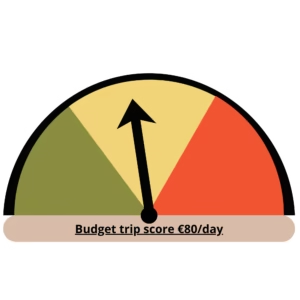
- Total per person: ~€390–€570 + flights
Travelling in June or the second half of September keeps catamaran prices and accommodation costs near the lower end of these ranges, while ferry schedules are still frequent enough to make this exact route workable.
Practical Travel Tips for Island Hopping in Croatia
- Book catamarans early in peak season — July and August routes between popular islands can sell out a day or more in advance.
- Pack light. You’ll be carrying your luggage on and off boats daily; a backpack or soft duffel is far easier than a hard suitcase.
- Have a backup day in mind. Ferry schedules can change due to weather, especially on smaller routes — build in flexibility if your itinerary is tight.
- Cash is still useful on smaller islands, particularly for boat tours, bike rentals, and family-run konobas that don’t take cards.
- Swimwear and water shoes are essential — almost every beach on this route is pebble or rock rather than sand.
For images and videos, click the buttons below.
For more similar trips, click on one of the images.